
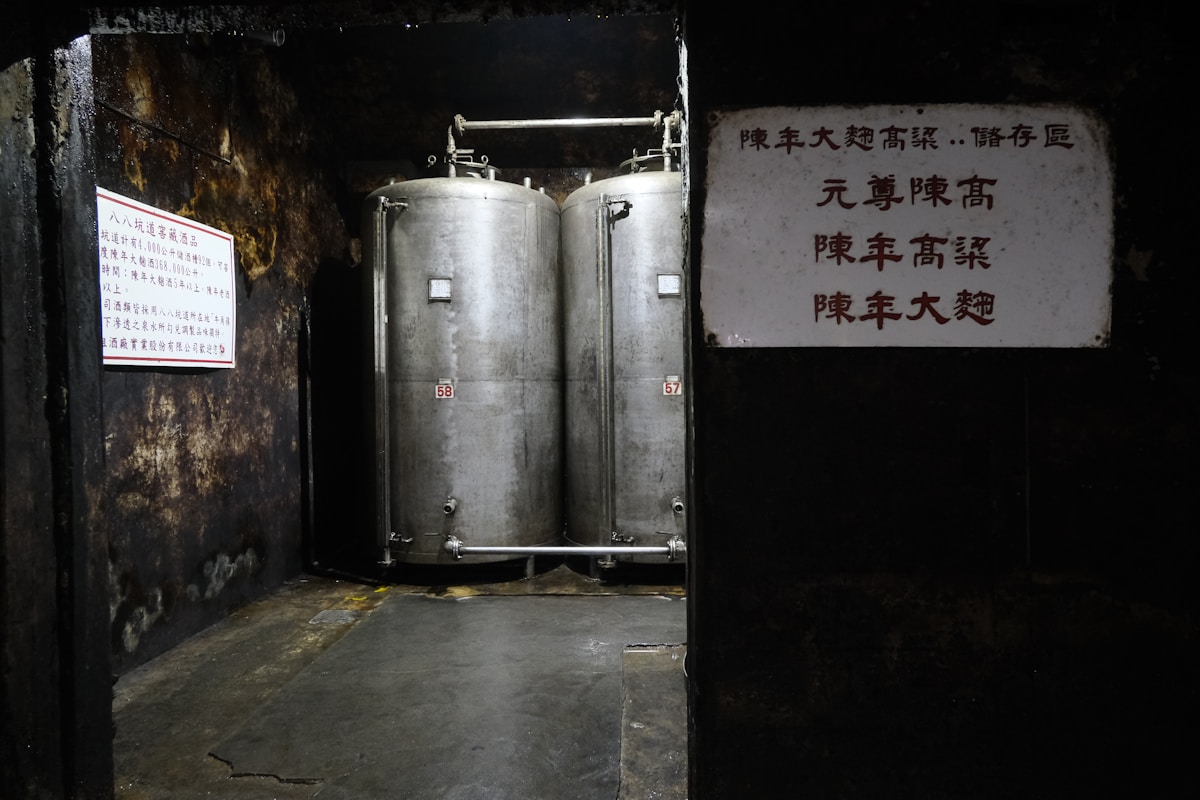
For decades, fermentation monitoring meant one thing: manual sampling. Brewers would pull samples from tanks, measure gravity with a hydrometer or refractometer, and log the results. Multiple times per day. Every day. For every tank. It was labor-intensive, prone to human error, and reactive—you found out about a problem when you sampled, not when it started.
That's changing. Real-time fermentation sensors are now affordable enough for nano and small breweries. Systems from companies like Sennos, PLAATO, TZero, and Endress+Hauser allow brewers to monitor gravity, temperature, pressure, pH, and more—continuously, remotely, and in real-time. The data flows to dashboards on phones and desktops. Alerts fire when something goes wrong. Fermentation becomes visible.
The impact is significant. Small breweries can now achieve the kind of consistency and process control that was once the domain of regional operations with dedicated QA labs. The tech migration is democratizing quality—and it's happening fast.
The Sensor Landscape
Several platforms have emerged to serve the small-brewery market:
Sennos (formerly Precision Fermentation) offers the M3 In-Tank Sensor Stack, a modular system that monitors eight parameters: gravity, pH, temperature, pressure, dissolved oxygen, and conductivity. It integrates with the Sennosystem analytics platform, which provides AI-powered recommendations and predictive intelligence for fermentation completion and anomaly detection. According to Sennos, the platform has analyzed over 22,917 fermentations and collected 3.4 billion data points. Pricing starts at $99/month for pre-orders.
PLAATO's Smart Fermentation uses the Plaato Pro sensor to provide live fermentation curves for gravity, temperature, and pressure. The company claims 90% fewer manual checks, up to 85% faster issue detection, and a 60% reduction in fermentation deviations. Intelligent alerts and batch performance analytics are included.
TZero, a State College, Pennsylvania company founded by homebrewers Stephen and Nicholas Wells and Eli Hughes, uses ultrasound-based sensors that fit into standard stainless steel fermenters. Data transmits via cellular gateways to a mobile dashboard. Brewers can identify when fermentation begins, peaks, and completes—enabling faster tank turnover and reduced resource usage. According to Happy Valley Industry, TZero is working with breweries across North America, from Alaska to Quebec to California and Florida.
Endress+Hauser's QWX43 fermentation monitor measures density, viscosity, temperature, and calculates alcohol content and residual extract in real-time. MashCraft Brewing achieved a 20% capacity increase and up to $10,000 in yearly labor savings by eliminating up to three manual samples per day.
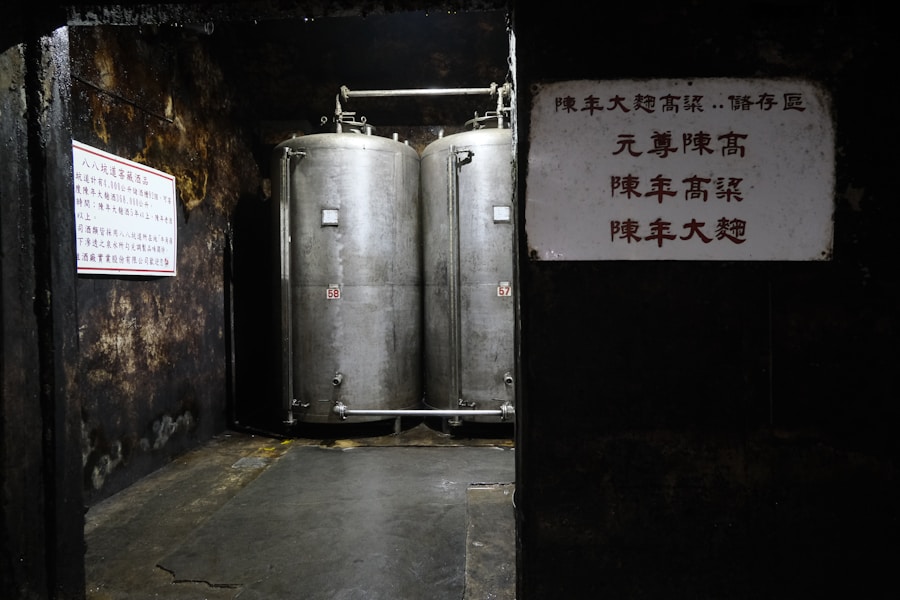
Fermentation tanks like these can now be monitored in real-time with smart sensors. (Unsplash / Luo Jin Hong)
Why This Matters for Nano-Breweries
Nano-breweries operate with tight margins and small teams. Every hour spent on manual sampling is an hour not spent on brewing, packaging, or selling. Consistency is hard when you're pulling samples a few times a day and hoping you didn't miss a temperature spike or a stalled fermentation.
Real-time sensors change the equation. A brewer can check fermentation status from their phone—at home, at the bar, anywhere. Alerts catch problems early. Historical data improves recipe refinement. Tank turnover speeds up because you know exactly when fermentation is done, without over- or under-conditioning.
The cost has dropped. Systems that once required six-figure investments are now available for hundreds of dollars per month. Nano-breweries can access the same data streams that regional breweries use—without the capital outlay.
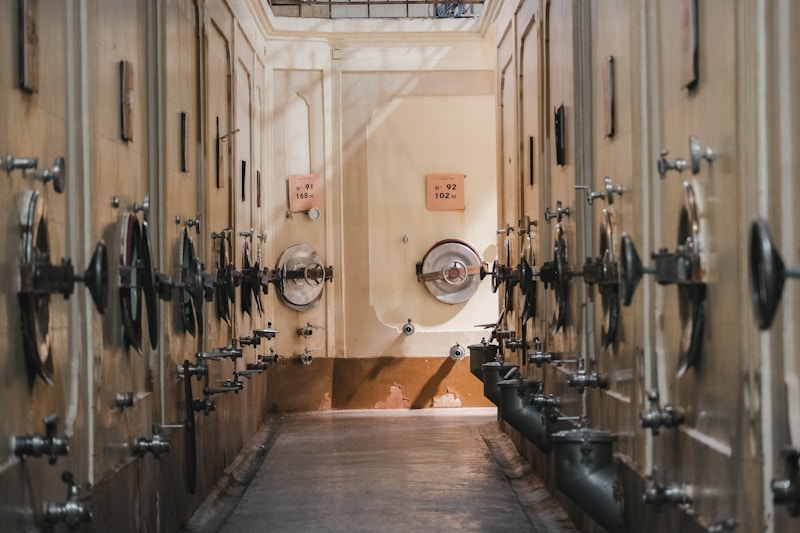
Fermentation tanks: real-time sensors eliminate manual sampling. (Unsplash / Joao Vitor Marcilio)
The Consistency Advantage
Consistency is the holy grail of brewing. Drinkers expect the same beer every time. Retailers and distributors expect it. Variability costs money—in rework, in lost accounts, in reputation. Real-time sensors reduce variability by providing visibility. You see the fermentation curve. You see when it deviates. You can intervene before the batch is lost.
For nano-breweries competing with larger, more established brands, consistency is a differentiator. "Our beer is the same every time" is a selling point. Sensors make that claim credible—and achievable.
The Synthesis: Tech Democratization
The fermentation sensor trend is part of a broader pattern: tech democratization. Tools that were once exclusive to large operations—ERP systems, quality control labs, real-time monitoring—are now accessible to small businesses. Software-as-a-service, modular hardware, and cloud connectivity have lowered the barriers.
For craft beer, that means a more level playing field. A nano-brewery in Pennsylvania can achieve the same process control as a regional brewery in Colorado. The difference is no longer capital. It's execution. TZero, Sennos, PLAATO, and Endress+Hauser have made real-time fermentation monitoring accessible. Breweries across North America—from Alaska to Florida—are already adopting these systems. The technology has crossed the chasm from early adopters to mainstream. For nano-breweries weighing the investment, the calculus is straightforward: labor savings from eliminating manual sampling, faster issue detection that prevents lost batches, and the ability to optimize fermentation schedules for faster tank turnover. Systems like Sennos and PLAATO offer subscription models that lower the upfront cost. The ROI typically materializes within the first year. The Smart Tank era is here—and it's accessible to everyone.
The Data Advantage
Beyond real-time monitoring, fermentation sensors generate historical data. Over time, a brewery can compare batches, identify patterns, and refine recipes. "Fermentation X always finishes faster in the summer" or "we get better attenuation when we pitch at this rate" become data-driven insights rather than hunches. Sennos claims to have analyzed over 22,917 fermentations—that's a dataset that enables predictive intelligence. For nano-breweries, the benefit is twofold: immediate visibility into current batches, and long-term learning that improves consistency. The sensors don't just replace manual sampling; they create a knowledge base that compounds over time. That's a strategic advantage for breweries that are serious about quality.
Implementation Considerations
Breweries considering fermentation sensors should factor in a few variables. First, compatibility: do the sensors fit existing tank configurations? Many systems are designed for standard stainless steel fermenters, but custom or older equipment may require adaptation. Second, data integration: does the platform integrate with existing brewery management software? Third, training: staff need to understand how to interpret the data and respond to alerts. The ROI comes from faster issue detection and reduced manual labor—but only if the team uses the tool effectively. Fourth, cost structure: subscription-based models (e.g., $99/month) lower the barrier to entry compared to capital purchases, but long-term costs add up. Breweries should model the payback period against labor savings and quality improvements. For many nano-breweries, the math works within the first year.
Sources: Sennos – Brew Smarter with Real-Time Sensing; Happy Valley Industry – TZero sensor company; Endress+Hauser – MashCraft Brewing case study; PLAATO – Smart Fermentation; Breweries in PA – fermentation technology.
Operational discipline matters when you're managing fermentation and quality control. BrewLedger helps craft breweries track batches, inventory, and production—see how it works when you're ready.