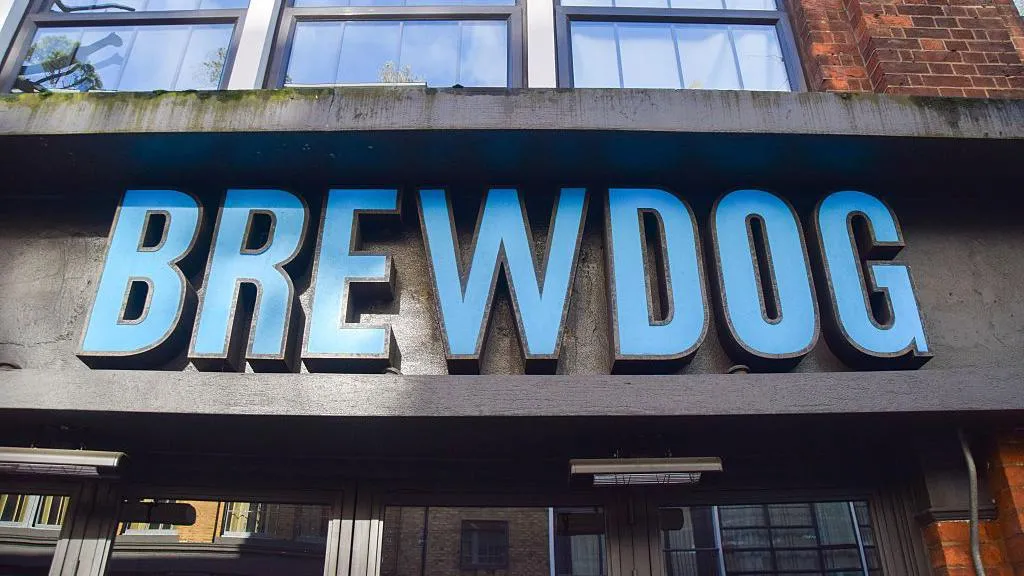
Hey folks. Big news out of Scotland: Brewdog has brought in restructuring specialists to explore a sale. It's one of the most recognizable craft beer brands globally, so the move matters—and it fits a pattern we've been watching for a while.
Brewdog isn't shutting down. Bars and breweries keep running. But the fact that leadership is openly evaluating a sale or breakup tells you something about where the industry stands.
What's Happening
Brewdog, founded in 2007 by James Watt and Martin Dickie in Scotland, has grown into a global operation: roughly 60 bars in the UK, breweries in Ellon, the US, Australia, and Germany, and around 1,400 employees. This month the company appointed AlixPartners—a firm known for turnaround and restructuring work—to run a "structured and competitive process" to evaluate the next phase of investment. That could mean a full sale, a partial sale, or a breakup of the business.
A company spokesperson described it as a "deliberate and disciplined step" to strengthen Brewdog's long-term future. No decisions have been made. Staff were told in an internal email that day-to-day operations, roles, and immediate plans are unchanged. Bars and breweries will continue to operate as normal.
AlixPartners is a serious choice—the firm has handled turnarounds at General Motors and Enron, and assisted in the aftermath of the Bernie Madoff scandal. As VinePair's Dave Infante put it, they're "a bona fide financial cleanup crew." Sky News reported the board was hoping to set a quickfire deadline for indicative offers. The Financial Times followed up by noting that AlixPartners was considering deals for separate pieces of the business: brands, brewing capacity, and the pub estate. Production could go to a European macrobrewer; the pub network to a UK on-premise giant like Mitchells & Butlers. Independent researcher Ben Ostrow, who first flagged Brewdog's financial structure in 2021, told Infante: "Never a good sign when your banker thinks you'll get more value separating business lines that previously were pitched as synergistic." Synergies: unachieved.
The Backdrop
The announcement didn't come out of nowhere. Brewdog has been under pressure for a while. In October 2025, the company announced job cuts after posting a £37 million loss. Earlier that year it closed 10 bars across the UK, including its flagship pub in Aberdeen. In January 2026, it halted production of gin and vodka at its Ellon distillery—the distillery has since been shuttered indefinitely. Last summer, Punk IPA was delisted from nearly 2,000 UK pubs and bars, according to pub industry data.
There have been other headwinds. In 2024, the company faced backlash after moving new hires off the real living wage to the legal minimum. Watt stepped down as CEO and moved to a newly created "captain and co-founder" role. Dickie left the company last year for personal reasons. Watt has been tipped as a potential buyer in the current sale process—though beer writer Melissa Cole has called a Watt-led buyout "hubris of the highest order."
Brewdog has always been known for bold marketing and a distinctive culture. There are bright spots: stateside, production grew from 73,000 barrels in 2023 to 89,000 in 2025, per Brewers Association data. The question now is whether a new owner or investor can stabilize the business while preserving what made the brand resonate.
Workers and the Sale Process
Unite Hospitality has called a demonstration for 25 February at the Brewdog bar on Union Square in Aberdeen—in response to the treatment of workers before and during the sale process. The dispute centres on what Unite describes as a lack of consultation, the abandonment of the real living wage, widespread bar closures, and slashed contracted hours.
Aberdeen-based Brewdog worker Dennis Ellis told Unite: "Yet again, workers across Brewdog have been left in the dark about what is happening with this sale. We found out at the same time as the press and have had one meeting with the CEO in which he said 'there will be two weeks of uncertainty' with no clarity about what happens thereafter. Our hours have been cut from 32 hours to 24 hours a week, despite being on full time contracts. That's a loss of roughly £400 a month—during a cost-of-living crisis."
Unite general secretary Sharon Graham said the sale is "the result of years of catastrophic mismanagement—prioritising private equity returns over workers and a sustainable business." Unite national lead Bryan Simpson added: "This is the collapse of a brand once sold to customers as anti-establishment, now being auctioned to the highest bidder while workers and small investors are left to pick up the pieces."
Cole, speaking to the drinks business, said the workforce deserves peace of mind and dignity, but doubted they would get it. "This deal was always leading to this," she said. "The compound interest alone was never going to be achieved, and the empty promises of a million in shares and a better working environment were only ever sops to ensure profits over people."
Unite's Bryan Simpson told the BBC that workers learned about the sale from the headlines, not from the company: "This is people's jobs, this is people's rent, how they pay their bills and their childcare—and yet they are being informed about the sale of their employer through the press. That is morally unacceptable."
The Equity Punks
Brewdog's ~200,000 "Equity Punks"—retail investors who bought in through crowdfunding campaigns—have collectively invested over $100 million. Many believed they were backing an anti-establishment brand. The problem, as VinePair reported back in 2021, was that Brewdog would have needed to grow at an incredible rate and go public at an unheard-of valuation for those Punks to see a return. It never happened.
In 2017, TSG Partners bought roughly 22 percent of Brewdog for approximately £213 million. TSG's "Preferred" shares came with an 18 percent annual compounding return. Back-of-the-napkin math suggests TSG's stake could be worth nearly $1.3 billion from a sale—but Brewdog is unlikely to command that kind of price in 2026. The company was still selling Punk shares at an implied valuation north of $2 billion as recently as 2021. Whatever happens in the sale, it will almost certainly be a bad situation for the Punks. As Infante's source Ben Ostrow said five years ago: "It's just a really bad situation for those punks."
Watt remains Brewdog's biggest shareholder and has reportedly been canvassing financial backers for a bid to buy the company back. He and his wife, reality TV personality Georgia Toffolo, are reportedly worth over half a billion dollars together. Whether he returns or a new owner takes over, the Punks—and the workers—are the ones left holding the bag.
What It Means for the Rest of Us
Brewdog's situation is specific to its scale and structure—but it reflects a broader reality. Craft beer is operating in a tough economic climate. Costs are up, margins are tight, and many brands are cutting back, closing locations, or seeking new investment. Brewdog's decision to bring in AlixPartners is a signal that even well-known names are having to make hard choices about how to fund the next chapter.
For smaller breweries, the takeaway isn't that Brewdog is doomed—it's that the market rewards discipline. Focus on what works. Trim what doesn't. And if you're planning for the long term, assume the environment stays competitive.
The View From Here
I've been thinking about what Brewdog meant to a lot of us when it first blew up—the punk ethos, the crowdfunding, the idea that you could build something big without selling out. The irony isn't lost on anyone that the same brand is now being carved up by restructuring specialists while workers and small investors wait for clarity. That doesn't make the beer bad, or the people who still work there any less deserving of stability. It just means the story we were sold and the story we're living are two different things.
Craft beer has always had a tension between scale and soul. Some breweries grow and keep their identity; others grow and lose it. Brewdog tried to have it both ways—anti-establishment branding with establishment money—and the math eventually caught up. For the rest of us, the lesson isn't to avoid ambition. It's to be honest about what you're building, who you're building it for, and what happens when the music stops. The breweries that last are usually the ones that never promised more than they could deliver.
Operational discipline matters more than ever in a market like this. BrewLedger is built to support it—see how it works when you're ready.