Hey folks. AB InBev closed its acquisition of a majority stake in BeatBox Beverages in early 2026—$490 million for 85% of the company, with a path to full ownership after five years. The deal had been rumored for weeks; the Wall Street Journal pegged the total valuation at around $700 million. For a brand that started as a college project in Austin, it's a staggering exit. For the brewing industry, it's a signal worth reading.
BeatBox isn't beer. That's exactly why AB InBev wanted it. Here's what's going on—and what it means for anyone running a brewery.
The Deal
BeatBox was founded in 2011 by University of Texas at Austin students Justin Fenchel, Aimy Steadman, and Brad Schultz. The idea was simple: party-sized flavored punch in a box—easy to share, easy to carry. They pitched it on Shark Tank in 2014 and landed a $1 million investment from Mark Cuban. Shaquille O'Neal later joined as an investor. The brand grew from 380,000 cases in 2020 to nearly 2 million in 2022, and was on track to move more than 12 million cases by the end of 2025, according to Beer Business Daily.
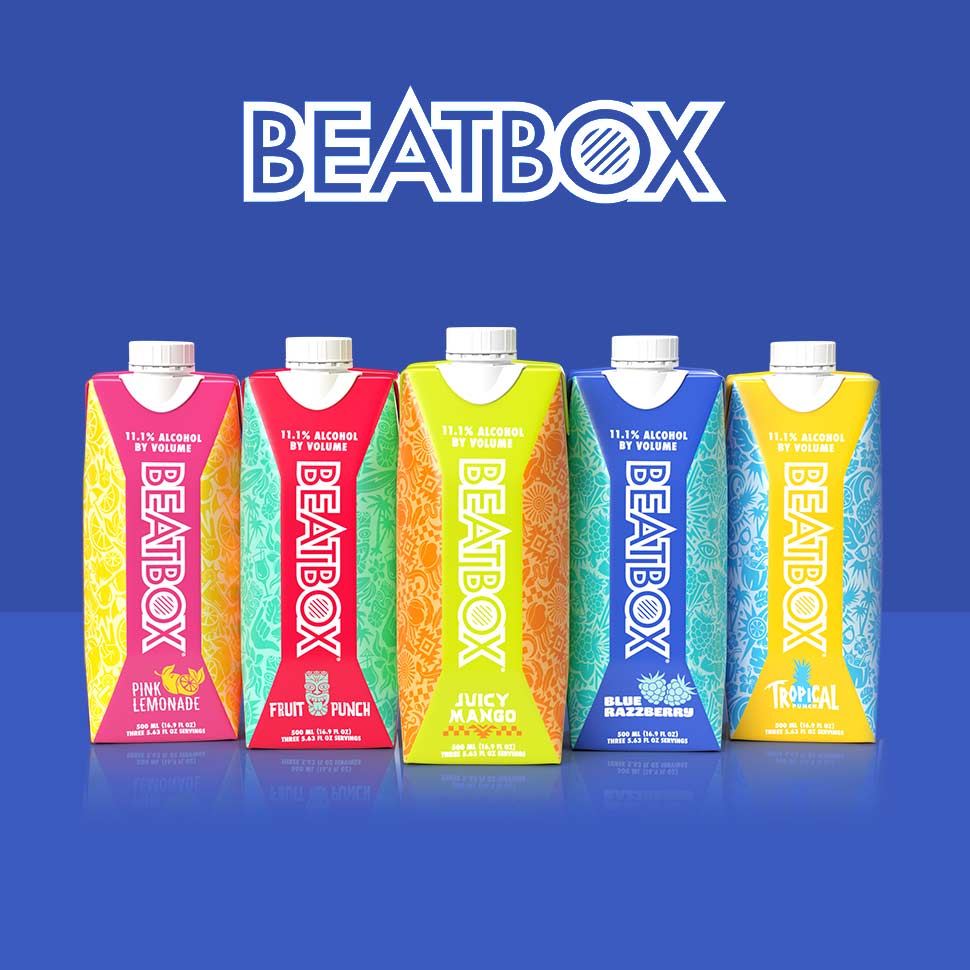
The product: wine-based, malt-based, and spirits-based "party punch" in colorful Tetra Pak boxes—330ml or 500ml, 11.1% or 8% ABV, flavors like Blue Raspberry, Fruit Punch, Juicy Mango, Orange Blast. Priced around $4–5 a box, it hit a sweet spot for Gen Z: high-octane, shareable, and cheap. BeatBox was the first US ready-to-drink brand to earn B Corp certification.
According to Circana data cited by AB InBev, BeatBox sold over $340 million in US retail in the 52 weeks ending November 23, 2025—growth of more than 50% year over year. It's a top 10 RTD brand. The deal closed in the first quarter of 2026, subject to regulatory approval.
BeatBox joins AB InBev's "beyond beer" portfolio alongside Cutwater Spirits (acquired 2019), Nütrl Vodka Seltzer, and Phorm Energy. Anheuser-Busch CEO Brendan Whitworth said he spent the past year getting to know Fenchel and the team before closing. "We have a proven playbook for building winning brands," he said in the announcement.
Why This Matters for Breweries
The BeatBox deal isn't about beer. It's about where the world's largest brewer is putting its capital when beer volume is flat or declining. AB InBev isn't betting on a new lager. It's buying growth in categories that are actually growing: RTDs, seltzers, canned cocktails, energy drinks. Food Dive notes that the proportion of new US beverage launches above 5% ABV rose from 48% to 55% between 2021 and 2024—consumers who drink are skewing toward higher-proof, convenience formats. BeatBox fits that profile perfectly.
For brewery owners, the takeaway isn't that you should pivot to boxed punch. It's that the competitive landscape is shifting. Big beer isn't standing still. It's acquiring brands that speak to demographics—especially younger drinkers—that traditional beer has struggled to reach. Michelob Ultra recently reclaimed the top-selling beer spot in the US, but beer overall is under pressure. AB InBev's response is diversification. When a company that size moves, it affects shelf space, distributor attention, and retailer priorities. The brands that get acquired are the ones that prove they can grow. The ones that get squeezed are the ones that don't.
Chron drew a parallel to Karbach—the Houston craft brewery AB InBev bought in 2016. Same playbook: build something that resonates, grow it organically, sell when the valuation is right. BeatBox isn't craft beer, but the logic is familiar. Find a category with momentum, back entrepreneurs who understand the consumer, and scale through distribution and marketing muscle.
The B Corp Question
BeatBox was a certified B Corp—a designation that signals social and environmental accountability. Selling 85% of your company to AB InBev raises obvious questions about what happens to that certification and the values it implied. We don't know yet how the acquisition will affect BeatBox's B Corp status or its governance. But it's worth noting: the founders framed the deal as a partnership that would "accelerate our growth" and "continue doing what we love." Whether that holds under majority ownership by a global conglomerate remains to be seen. For consumers who cared about the B Corp badge, the sale is a reminder that certifications can change hands with the company.
What Brewery Owners Should Take From This
1. Big beer is buying growth, not defending share. AB InBev isn't acquiring BeatBox to protect Bud Light. It's acquiring BeatBox because beer isn't growing fast enough. If you're a brewery, the implication is that your biggest competitor isn't just other breweries—it's the entire beverage alcohol aisle. RTDs, seltzers, and canned cocktails are competing for the same occasions and the same wallets.
2. Demographics matter. BeatBox's success with Gen Z wasn't an accident. High ABV, value pricing, shareable format, social-media-friendly packaging—it was built for a cohort that traditional beer has struggled to reach. If your brewery is still only talking to the same customers it had a decade ago, that's a risk. The question isn't whether you need to become BeatBox. It's whether you understand who's drinking—and who isn't—and why.
3. Distribution and scale still win. BeatBox had the product and the brand. AB InBev has the distribution network, the retailer relationships, and the marketing budget. The deal accelerates BeatBox's reach. For small breweries, the lesson is the same as it's always been: building a great product isn't enough. You need a path to market. Whether that's self-distribution, a collective like GoSelfDistro, or a strategic partner, the question of how your beer gets to the consumer is existential.
4. Exits are real. Fenchel, Steadman, and Schultz built something in 14 years that was worth nearly half a billion dollars to the world's largest brewer. Not every brand will get there. But the BeatBox story is a reminder that building a resonant brand—one that connects with a specific audience and grows with them—can create real value. The founders didn't need to be the biggest. They needed to be the right fit for a buyer with the resources to scale them.
The View From Here
The BeatBox deal is a reminder that "beer" and "brewing" are not the same thing. AB InBev is a beverage company that happens to make a lot of beer. When beer slows, it buys something else. That's rational. It's also a signal to anyone in the industry: the days when big beer could coast on volume are over. The future belongs to brands that can prove they're growing—or at least holding their own—in a market where consumers have more choices than ever.
For brewery owners, the BeatBox story is both cautionary and instructive. The caution: you're competing with a company that can drop $490 million on a brand that isn't even beer. The instruction: the brands that get acquired are the ones that built something distinctive, found their audience, and grew. You don't have to sell to AB InBev. But if you want to be relevant in a decade, you'd better have a story that resonates—and a path to the drinkers who'll care.
Operational discipline matters more than ever in a market like this. BrewLedger is built to support it—see how it works when you're ready.